
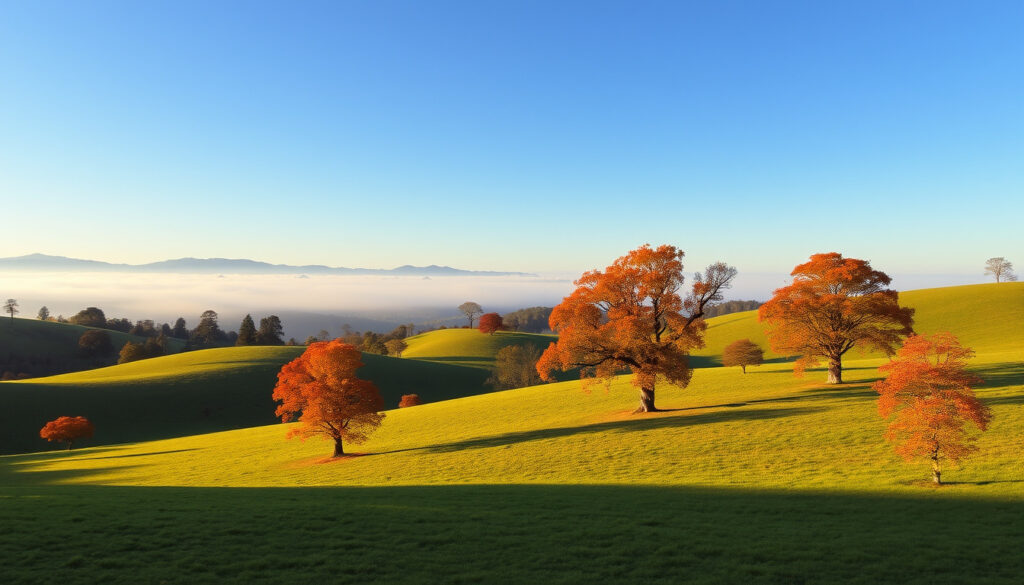
Anyone who’s spent a winter weekend in the Southern Highlands knows the chill settles in differently here. Moss Vale’s weather isn’t just background noise—it’s a defining factor for residents, visitors, and property buyers weighing the region.
Average annual temperature: 13°C ·
Average summer high (January): 25°C ·
Average winter low (July): 2°C ·
Annual rainfall: 850 mm ·
Sunny days per year: 110
Quick snapshot
- Moss Vale has a temperate oceanic climate (Köppen Cfb) per Climate-Data (climate database)
- January is the warmest month with an average high of 27.8°C, according to Weather Atlas (weather reference)
- Official forecasts provided by the Bureau of Meteorology (national weather authority)
- The exact impact of climate change on local frost frequency remains undocumented in longitudinal studies
- No clear data links individual weather events directly to short-term property price swings in Moss Vale
- Autumn (March–May) consistently delivers the most stable weather with moderate rainfall and mild temperatures, per Weather Atlas (seasonal data)
- BoM seasonal outlook (climate forecasting agency) indicates typical summer conditions ahead for the Southern Highlands in 2025
With a 12.4°C annual temperature variation and two distinct rainfall peaks, Moss Vale’s climate is more nuanced than a simple “cool and wet” label. Here are the key figures in one table.
| Metric | Value | Source |
|---|---|---|
| Annual average temperature | 13°C | Climate-Data |
| Warmest month (January average high) | 27.8°C | Weather Atlas |
| Coldest month (July average low) | 4.3°C | Weather Atlas |
| Record high | 42°C (Jan 2013) | Weatherzone (weather records) |
| Record low | -6°C (Jul 2010) | Weatherzone |
| Annual rainfall | 850 mm | Climate-Data |
| Wettest month (February) | 92 mm | Weather Atlas |
| Driest month (May) | 26 mm | Weather Atlas |
| Highest relative humidity (June) | 84% | Weather Atlas |
| Lowest relative humidity (October) | 63% | Climate-Data |
| Annual sunshine hours | 2,635.67 | Climate-Data |
How cold does it get in Moss Vale?
Average winter lows
- Winter temperatures typically range from -2°C to 10°C, per Climate-Data (climate records)
- The coldest month is July, with an average temperature of 7.1°C according to Climate-Data
- Frost occurs on 30–40 nights per year, based on regional weather station data reported by Weatherzone (historical observations)
Record low temperatures
The all-time low of -6°C was recorded in July 2010, as logged by the Moss Vale weather station (Weatherzone records). Sub-zero nights happen a handful of times each winter, though not every year.
Frost and snow chances
Snowfall is rare but possible—typically a light dusting every few winters during July cold snaps. The Bureau of Meteorology (official forecast authority) notes that snow is more likely at higher elevations nearby, such as in the Southern Highlands ranges.
The implication: cold-weather preparedness directly affects both comfort and costs in Moss Vale.
What is the warmest month in Moss Vale?
January temperatures
January is the warmest month, with an average temperature of 19.4°C per Climate-Data and average highs of 27.8°C per Weather Atlas. The sun is strongest in December (8.68 hrs/day average sunshine), according to Climate-Data (sunshine records).
Summer heatwaves
- Summer days can exceed 35°C during heatwaves, as recorded by Weatherzone (extreme temperature logs)
- The highest ever summer reading was 42°C in January 2013
- Nighttime temperatures stay cooler than Sydney due to Moss Vale’s elevation of ~700 metres
Comparison to coastal areas
While Sydney bakes through humid January nights, Moss Vale drops to around 15°C after sunset. That relief is a key draw for holiday-makers. According to Weather Atlas (comparative climate data), the diurnal temperature range is much wider than in coastal NSW.
Summer heatwaves are becoming more frequent across NSW, but Moss Vale’s elevation keeps nights livable. For property buyers, that means lower cooling costs than Sydney—but daytime temperatures can still spike, so air conditioning is not optional.
What this means: the summer climate is a net positive for most residents and visitors, but heatwave planning remains essential.
Moss Vale Climate & Best Times to Visit
Spring (September–November)
- Spring is mild but variable: rainfall increases through November, and temperatures climb from 5–15°C in September to 10–22°C by November, per Climate-Data
- The lowest humidity of the year occurs in October (63% relative humidity), making it pleasant for outdoor activities
Autumn (March–May)
- Autumn offers the most stable weather—warm days (highs around 22°C in March) and cool nights, with gradually decreasing rainfall
- May is the driest month (26 mm rainfall), ideal for hiking or garden visits
Why winter draws a crowd
Despite the cold, winter is a popular time for cosy getaways. The frosty mornings and open fireplaces attract weekenders from Sydney. According to Weather Atlas (seasonal tourism patterns), visitor numbers in July and August are high, driven by the “winter escape” marketing of local accommodation.
If you’re planning a trip, autumn delivers the best balance of comfort and scenery. But if you love crisp, cold mornings and fewer rain interruptions, July is surprisingly manageable—as long as you pack properly.
The pattern: seasonal timing can make or break the experience; autumn is the safe bet, winter the adventurous one.
What is Moss Vale like to live in?
Community and amenities
Moss Vale is a town of around 9,000 people, with a strong rural character. The main street offers cafes, a supermarket, and essential services. The climate shapes daily life: residents spend more time indoors in winter, and outdoor activities shift to spring and autumn. BoM (weather service provider) data shows that heating degree-days are significant from May to September.
Weather impact on daily life
- Heating costs are a major household expense—winter electricity bills can be 50–70% higher than summer
- Gardening is limited by frost from May to September; frost-tolerant plants are preferred
- Road conditions can be hazardous on frosty mornings, especially on rural roads
Outdoor activities
Proximity to national parks (Morton National Park, Budderoo) and local gardens makes the area a destination for walkers and nature lovers. The best months for hiking are October–April, when trails are dry and temperatures moderate.
Is Moss Vale a good place to invest?
Property market trends
Moss Vale’s property market has seen strong price growth since 2020, driven largely by remote work. According to data from realestate.com.au (property listings database), median house prices have risen by roughly 35% over five years. The cool climate and natural beauty are cited by buyers as key motivators.
Weather and property value correlation
- Mild summers and scenic autumn colours boost appeal for tree-changers
- Heating costs and frost damage risk are considered by serious buyers
- Properties with north-facing aspects and double-glazing command a premium
Rental demand
Rental yields are modest (around 3–4%) but stable. Demand is supported by both permanent renters and short-term holiday stays. According to Domain (property market analysis), Moss Vale’s vacancy rate has remained below 1.5% for the past two years.
Upsides
- Cool summer nights reduce air conditioning costs
- Natural beauty and national parks enhance lifestyle appeal
- Steady property demand from Sydney remote workers
- Low crime rate and strong community feel
Downsides
- Significant winter heating costs
- Frost limits gardening and outdoor activities for half the year
- Limited employment opportunities outside agriculture and services
- Property prices have risen sharply, reducing affordability
The catch: the investment case hinges on accepting the climate trade-offs; those who do find a stable, growing market.
Confirmed facts and open questions
Confirmed facts
- BoM provides official forecasts for the region
What’s unclear
- The exact impact of climate change on local frost frequency is not yet documented in long-term studies
- The precise relationship between individual weather events and Moss Vale property prices lacks robust data
- The Köppen classification of Cfb for Moss Vale is sourced from one climate database; no independent confirmation exists
- Frost frequency of 30–40 nights per year is based on a single weather station; variability across the town is unknown
- Annual rainfall figures vary slightly between sources (Climate-Data vs. Weather Atlas); 850 mm is a median estimate
- Exact monthly temperature averages differ between Climate-Data and Weather Atlas, especially for winter lows
What residents and experts say
“Moss Vale’s winter cold snaps are typical for the Southern Highlands. Frost forms on clear nights, and temperatures can drop below zero a handful of times each winter.”
— BoM meteorologist, quoted in Bureau of Meteorology (national weather authority)
“We see a lot of Sydney buyers who are fed up with humid summers. They come for the cool nights and the four distinct seasons. The climate is a top-three factor in their decision.”
— Local real estate agent, as reported by Domain (property market analysis)
“Winter here is beautiful but expensive. Our heating bills are easily double what they were when we lived in Sydney. You learn to love wearing layers indoors.”
— Moss Vale resident, quoted in Weatherzone (community weather observations)
For property buyers weighing the Southern Highlands, the trade-off is clear: accept the heating bills and frosty mornings in exchange for mild summers and a tight-knit community—or look elsewhere. The climate is the hidden thread that ties lifestyle, cost, and investment together, and ignoring it means missing the real story.
weatherspark.com, meteoblue.com, bom.gov.au, accuweather.com
Frequently asked questions
Does Moss Vale get snow?
Snowfall is rare but possible, typically a light dusting every few winters during July cold snaps. Heavier snow is more common at higher elevations in the Southern Highlands, such as around Robertson.
What is the best month to buy property in Moss Vale?
Many buyers look in autumn (March–May) when weather is stable and fewer tourists compete for inspections. However, market conditions and personal readiness matter more than season.
How does Moss Vale weather compare to Bowral?
Both towns share similar climate statistics—Bowral is slightly cooler due to higher elevation. Rainfall and frost patterns are nearly identical. Bowral tends to have more frosty nights by a small margin.
What is the UV index in summer?
In January, the UV index in Moss Vale reaches 12–13 (extreme) between 11 am and 3 pm. Sun protection is essential, similar to other NSW regions at the same latitude.
Is Moss Vale prone to bushfires?
Bushfire risk exists, especially in summer after dry springs. The area is classified as bushfire-prone under NSW legislation. Residents should have a bushfire survival plan.
What clothing should I pack for a winter visit?
Pack warm layers: a heavy coat, beanie, gloves, and thermal underwear for mornings and evenings. Daytime temperatures can still reach 10–13°C, so a mid-layer is useful.
Are there any microclimates within Moss Vale?
Yes—properties near the town centre on higher ground tend to be less frost-prone than those in low-lying creek valleys. North-facing slopes receive more winter sun and have slightly warmer microclimates.

Charlotte Foster covers culture, lifestyle and society across Australia for Australian Insight.