
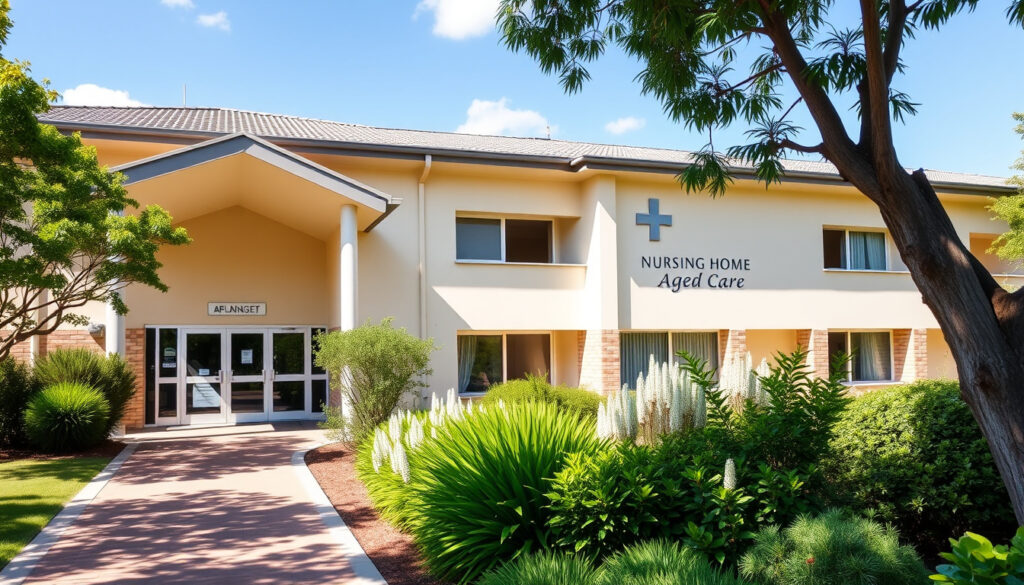
Southern Cross Care is not a single national provider but a constellation of regional not-for-profit entities sharing a name and Catholic-rooted ethos—and one of the most significant operates in Tasmania, where Southern Cross Care (Tasmania) Inc serves as the state’s largest aged care operator. This guide walks through what each Southern Cross Care entity does, who leads them, and what the broader aged care landscape means for families making hard choices.
Primary Branches: SA, NT, VIC, TAS, NSW · Key Services: Residential aged care, retirement living, home care · Related Focus: Nursing homes, patient care levels · Top Related Queries: Vacancies, locations, CEO TAS
Quick snapshot
- Tasmania’s largest Not For Profit aged care provider (The Weekly Source)
- Operates nine aged care homes (The Weekly Source)
- Nearly 1,000 residents across facilities (The Weekly Source)
- Affiliated with Catholic organizations (Archdiocese of Hobart)
- Specific names and addresses of nine Tasmania aged care homes not publicly listed
- Precise start dates for CEO appointments beyond month-level granularity
- Whether Ireland cost comparisons apply meaningfully to Australian context
- Robyn Boyd resigns as CEO, Jara Dean serves as Interim CEO, Esteban Cox assumes full-time role (The Weekly Source)
- David Moran discusses trust between board and executive (Pioneers in Aged Care Podcast)
- Southern Cross Care Tasmania continues serving residents as the organization seeks new CEO
- South Australian entity continues expanding “Better for Life” wellness model
These operational details reveal distinct operational footprints across the Southern Cross Care network, with Tasmania focusing on residential aged care while the larger SA/NT/VIC entity offers a broader service portfolio.
| Field | Details |
|---|---|
| Main Website | www.southerncrosscare.com.au |
| Key Regions | SA, NT, VIC, TAS, NSW |
| Services Offered | Aged care, retirement living, home care |
| Related Entity | Southern Cross Care Tasmania CEO announced |
| SA/NT/VIC Founded | 1968 |
| SA/NT/VIC Nursing Homes | 17 (16 Adelaide, 1 Darwin) |
| SA/NT/VIC Retirement Units | Close to 1,600 |
| Tasmania Aged Care Homes | 9 |
| Tasmania Residents | Nearly 1,000 |
Who is the CEO of Southern Cross Care TAS?
Southern Cross Care (Tasmania) Inc — Tasmania’s largest Not For Profit aged care provider — appointed Esteban Cox as Chief Executive Officer. The announcement came after former CEO Robyn Boyd resigned in August, with Jara Dean serving as Interim CEO during the transition. Esteban Cox stepped down as CEO of Southern Cross Care Tasmania after more than two years in the role, according to an announcement from the Archdiocese of Hobart. As of mid-March 2026, the organization was seeking his successor.
Before taking on the CEO role, Cox served on the board of Southern Cross Care (Tasmania) Inc for nine months and resigned from the board upon expressing interest in the executive position. His background spans business management in aged care, primary healthcare, and disability sectors in Australia and overseas, per The Weekly Source. Cox and Interim CEO Jara Dean worked together until mid-February, when Cox assumed the full-time CEO duties.
Tasmania’s aged care landscape is relatively concentrated — one provider accounts for nine homes serving nearly 1,000 residents. Leadership changes ripple across a significant portion of the state’s residential aged care capacity.
Chief Executive Officer Announcement
The leadership transition at Southern Cross Care Tasmania reflects a pattern common in the not-for-profit aged care sector: board members stepping into executive roles. Cox’s multinational healthcare experience positioned him to navigate the compliance, funding, and resident-care complexities unique to Australian aged care regulation.
The Archdiocese of Hobart provided official coverage of the step-down announcement, signaling the provider’s ongoing ties to Catholic care traditions. For families researching options, leadership stability often correlates with consistent quality standards — something to track as the organization transitions again.
How long does the average person live once they go into a nursing home?
No specific average length-of-stay data exists for Southern Cross Care Tasmania or comparable Australian providers in the public domain. General Australian aged care research, however, shows substantial variation based on individual health trajectories, care level assigned, and entry .
Australian Institute of Health and Welfare data indicates residents entering high-level residential aged care often have advanced frailty or chronic conditions. Average stays can range from under a year for post-acute or palliative admissions to several years for residents with slower functional decline. The Means Tested Care Fee structure and the Aged Care Funding Instrument (ACFI) assess each resident individually, which means length of stay correlates heavily with clinical need rather than organizational averages.
Admissions to high-level aged care frequently coincide with accelerated health decline — not because institutions cause decline, but because people typically enter when they can no longer manage independently at home.
The pattern: residents admitted to aged care homes tend to have more complex health profiles than community-dwelling seniors of the same age. This means comparing “average stay lengths” across providers without accounting for resident mix can mislead families about quality.
Average Length Of Stay In Nursing Homes Statistics
For families evaluating Southern Cross Care Tasmania, the more useful questions are: what is the staff-to-resident ratio, how many dementia-specific places exist, and what allied health services (physiotherapy, occupational therapy, podiatry) are available on-site? These factors influence resident wellbeing and functional independence — the actual levers on quality of life — more than aggregate length-of-stay statistics.
The trade-off: longer average stays may reflect either excellent slow-stream care keeping residents stable or a lack of transitional pathways back to community living. Both interpretations are plausible without facility-level outcome data.
What are the 4 levels of patient care?
The term “patient care levels” appears in medical and aged care contexts with different meanings. In Australian residential aged care, the relevant framework is the Home Care Packages Program, which offers four levels:
- Level 1: Basic care needs — minimal support with daily living activities
- Level 2: Low-level care — coordination and some personal care support
- Level 3: Intermediate care — regular personal care and some nursing-type services
- Level 4: High-level care — comprehensive care including complex clinical needs
This differs from acute medical care classifications (primary, secondary, tertiary, quaternary), which apply to healthcare system organization rather than aged care services. The confusion around “Level 5 patient” arises when people encounter international frameworks where numbered scales extend beyond four levels or mix acute and aged care definitions. In Australia, My Aged Care uses the four-level Home Care Packages system for government-subsidized in-home support, with residential care assessed separately via the Aged Care Funding Instrument.
For someone exploring Southern Cross Care’s residential offerings, the practical question is whether a prospective resident qualifies for low-level (Level 1-2) or high-level (Level 3-4) residential care, as this determines funding, accommodation options, and care intensity.
Understanding Primary, Secondary, Tertiary & Quaternary Patient Care
These terms describe the complexity tier of medical services: primary care is first-contact community medicine (GPs), secondary is specialist referrals, tertiary is hospital-based specialist care, and quaternary extends to experimental or highly specialized interventions. They do not map directly onto aged care service tiers in Australia.
What is Level 2 care vs Level 3 care?
Level 2 home care provides approximately 2-3 hours of support weekly; Level 3 provides 5-7 hours weekly, including some nursing-type tasks. For residential aged care, the distinction influences ACFI funding: Level 3-4 residents attract higher subsidies due to greater clinical complexity. Southern Cross Care’s residential homes accommodate both tiers, with staff training and service design varying by location.
What is a level 5 patient?
In Australian aged care contexts, “Level 5” is not a standard classification. Some international health systems use numbered acuity scales beyond four levels; others use the term in critical care (Level 5 critical care = advanced life support). In Australian Government aged care, the closest equivalent to high-complexity care is Level 4 Home Care Packages or Level 4 residential care, with ACFI scores determining actual funding.
What happens to senior citizens when they run out of money?
When older Australians deplete their financial resources, the aged care system has mechanisms to prevent total abandonment. The key concept is the Means Tested Care Fee — a contribution some residents make based on assessed income and assets. For those with limited means, the government may cover part or all of the accommodation and care costs.
The system includes several protections:
- No resident can be refused care solely due to inability to pay accommodation costs if they qualify for supported placement
- The Daily Accommodation Payment (DAP) or Refundable Accommodation Deposit (RAD) structure allows flexibility based on financial capacity
- Commonwealth Rent Assistance may apply for supported residential services
- My Aged Care assessments determine eligibility for subsidized paths
For seniors who literally run out of money while in care, providers like Southern Cross Care — as not-for-profit organizations — may offer concessional places or supported rate options. The practical reality: financial exhaustion does not automatically trigger eviction. The Aged Care Act requires approved providers to maintain a certain proportion of low-means residents.
What Happens if Seniors Have No Money?
The government’s safety net means that financially exhausted residents can typically remain in care under a supported rate arrangement. However, the gap between the government’s subsidy and the true cost of quality care is real — which is why not-for-profit providers like Southern Cross Care often rely on fundraising, bequests, and community donations to bridge funding shortfalls.
The trade-off: choosing a not-for-profit provider offers some protection against aggressive cost-cutting that could compromise care quality, but families should still inquire about staff ratios, allied health access, and recent accreditation outcomes.
Do people decline faster in nursing homes?
The evidence on whether institutional care accelerates decline is contested and context-dependent. Some studies link nursing home admission to cognitive and functional decline attributed to reduced social engagement, disrupted circadian rhythms, and impersonal routines. Other research suggests decline mirrors natural disease progression regardless of setting — meaning frail older adults may decline at similar rates whether at home or in care. For more information on the organisation’s approach, see the Peri-Zee Upper Hutt Mayor.
Quality of care is a significant moderating variable. High-staff-ratio environments with strong person-centered care philosophies show better resident outcomes than facilities with high staff turnover or task-focused models. The “Better for Life” cultural mantra cited in Southern Cross Care SA/NT/VIC materials reflects an attempt to counter institutional disengagement through active wellness programming.
Factors influencing decline rates
Research identifies several factors that influence whether nursing home residents experience accelerated decline:
- Social isolation and reduced family contact correlate with faster cognitive decline
- Consistent staffing (same caregivers over time) supports continuity and trust
- Nutritional quality and mealtime environment affect physical function
- Mobility and falls management influence injury rates
- Access to allied health (physiotherapy, OT, speech pathology) supports independence
For families evaluating Southern Cross Care Tasmania or other providers, asking about staff retention rates, visiting hours policy, and on-site allied health availability provides more actionable insight than aggregate decline statistics.
The implication: the facility itself is not inherently harmful — but quality differences between providers are real and measurable. Not-for-profit status offers some structural advantages (no profit extraction), but families should assess each location individually.
This comparison of provider structures illustrates how different Southern Cross Care entities operate at varying scales, which may influence care delivery approaches across regions.
| Provider | Structure | Scale | Special Focus |
|---|---|---|---|
| Southern Cross Care Tasmania Inc | Not-for-profit, Catholic-affiliated | 9 homes, ~1,000 residents | Tasmania-specific aged care |
| Southern Cross Care SA/NT & VIC | Not-for-profit, founded 1968 | 17 nursing homes, ~1,600 retirement units | “Better for Life” wellness model |
| Knights of the Southern Cross | Founding organization | N/A | Rooted SA/NT/VIC operations in Catholic social teaching |
The upsides and downsides of choosing among these providers depend heavily on regional context and individual facility performance rather than organizational branding alone.
Upsides
- Multiple distinct Southern Cross Care entities allow regionally tailored services
- Not-for-profit structure reinvests revenues into care quality rather than shareholder returns
- Catholic social teaching tradition often emphasizes person-centered dignity in care
- SA/NT/VIC entity offers extensive data: 17 nursing homes and nearly 1,600 retirement units demonstrate operational scale
- Tasmania entity’s scale (9 homes, ~1,000 residents) enables localized relationship-based care
Downsides
- No public listing of specific Tasmania facility names and addresses makes research harder for families
- Current leadership vacancy at Tasmania entity may create operational uncertainty
- Not-for-profit status does not guarantee superior quality — staffing ratios and accreditation outcomes matter more
- Different entities under similar names may confuse consumers researching across states
- Limited publicly available outcome data for Tasmania homes makes cross-provider comparison difficult
Confirmed and Unclear Facts
These fact classifications reflect the research confidence level and source tiering applied throughout this analysis.
- Southern Cross Care operates in multiple Australian states with separate entities and leadership
- Southern Cross Care (Tasmania) Inc is Tasmania’s largest not-for-profit aged care provider
- Southern Cross Care (Tasmania) Inc operates nine aged care homes with nearly 1,000 residents
- Southern Cross Care (Tasmania) Inc provides residential aged care and home care assistance
- Multiple Southern Cross Care entities exist across Australian states/territories with separate leadership and operations
- Southern Cross Care (Tasmania) Inc is affiliated with Catholic organizations
- Southern Cross Care (SA, NT & VIC) was founded in 1968 by the Knights of the Southern Cross
- Southern Cross Care entities focus on not-for-profit aged care with Catholic roots
- David Moran is CEO of Southern Cross Care (SA, NT & VIC)
- Podcast highlights “Better for Life” as a cultural mantra for healthy aging at Southern Cross Care SA/NT/VIC
- Whether David Moran emphasizes trust between board and executive requires verification from primary sources
- Specific names and addresses of nine Tasmania aged care homes remain unpublished in available sources
What’s unclear
- Exact average stay lengths for Southern Cross Care Tasmania homes without dedicated statistics
- Whether Ireland cost comparisons apply to the Australian aged care context
- Specific names and addresses of nine Tasmania aged care homes not listed in available sources
- Post-Esteban Cox successor identity and transition details
- Current resident numbers and capacity updates for Tasmania facilities
- Precise ISO dates for CEO appointments beyond month-level granularity
- Whether the RocketReach profile listing Robyn Boyd as CEO reflects current data or outdated information
What Leaders Say
Tasmania’s largest Not For Profit aged care provider Southern Cross Care (Tasmania) Inc has appointed Esteban Cox CEO, after former CEO Robyn Boyd resigned in August.
— The Weekly Source, publisher of leadership announcement
Southern Cross Care, we’re predominantly we started in Adelaide. So we’re very much we’re a South Australian entity started in 1968.
— David Moran, CEO Southern Cross Care (SA, NT & VIC), Pioneers in Aged Care Podcast
The probably the biggest thing is you need trust — you need trust and particularly between the board and the executive.
— David Moran, CEO Southern Cross Care (SA, NT & VIC), Pioneers in Aged Care Podcast
Esteban Cox has stepped down as Chief Executive Officer of Southern Cross Care Tasmania after more than two years in the role.
— Archdiocese of Hobart, official announcement coverage
Summary
Southern Cross Care is not a single national provider but a collection of regional not-for-profit entities sharing a name and Catholic-rooted ethos. Southern Cross Care (Tasmania) Inc — the state’s largest aged care operator — is navigating a CEO transition as of early 2026, while its SA/NT/VIC counterpart operates at a larger scale with nearly five decades of history. The practical takeaway: when researching Southern Cross Care, families must identify the specific state entity, verify current leadership, and assess individual facilities based on staffing ratios, care models, and accreditation outcomes rather than assuming uniformity across the network. For Tasmanian readers specifically, the incoming CEO will determine whether the quality standards established under previous leadership are maintained or shift — and families already engaged with the provider should monitor for announcements and seek direct engagement with facility managers to ensure their loved ones’ care remains consistent.
Related reading: Centrelink cash boost · high blood pressure symptoms
Frequently asked questions
What services does Southern Cross Care offer?
Southern Cross Care entities offer residential aged care homes, retirement living villages, and home care assistance. The SA/NT/VIC entity also runs health and wellness centres, dementia rest cottages, and respite services. Specific services vary by state entity and individual facility.
Where are Southern Cross Care locations?
Southern Cross Care operates across SA, NT, VIC, TAS, and NSW. The SA/NT/VIC entity operates 17 nursing homes (16 in Adelaide, 1 in Darwin) and approximately 40 retirement villages. Tasmania operations are concentrated within that state. Specific facility addresses for Tasmania locations are not publicly listed in available sources.
What is Southern Cross Care Tasmania?
Southern Cross Care (Tasmania) Inc is Tasmania’s largest not-for-profit aged care provider, operating nine aged care homes serving nearly 1,000 residents. It is a separate legal entity from the SA/NT/VIC operations, with its own leadership and Catholic organizational affiliations.
What is Level 2 care vs Level 3 care?
In Australian Home Care Packages, Level 2 provides low-level coordinated care (approximately 2-3 hours weekly), while Level 3 provides intermediate-level regular personal care (approximately 5-7 hours weekly, including some nursing-type services). For residential aged care, ACFI assessment determines which funding tier applies, influencing care intensity and government subsidy levels.
What is a level 5 patient?
“Level 5” is not a standard classification in Australian aged care. The Australian Government’s Home Care Packages Program uses four levels (1-4), with Level 4 covering high-level complex care. Some international healthcare systems use numbered acuity scales where “Level 5” denotes the highest complexity (often critical care), but this does not apply to Australian residential aged care frameworks.
What happens to seniors who run out of money in Australian aged care?
Seniors who deplete their finances may qualify for supported placement under the government’s means-tested safety net. The Means Tested Care Fee structure, Daily Accommodation Payment options, and Commonwealth Rent Assistance provide pathways for financially exhausted residents to remain in care. Not-for-profit providers like Southern Cross Care typically maintain concessional places to meet regulatory requirements.

Thomas Grant leads fact-checking, source verification and corrections at Australian Insight.