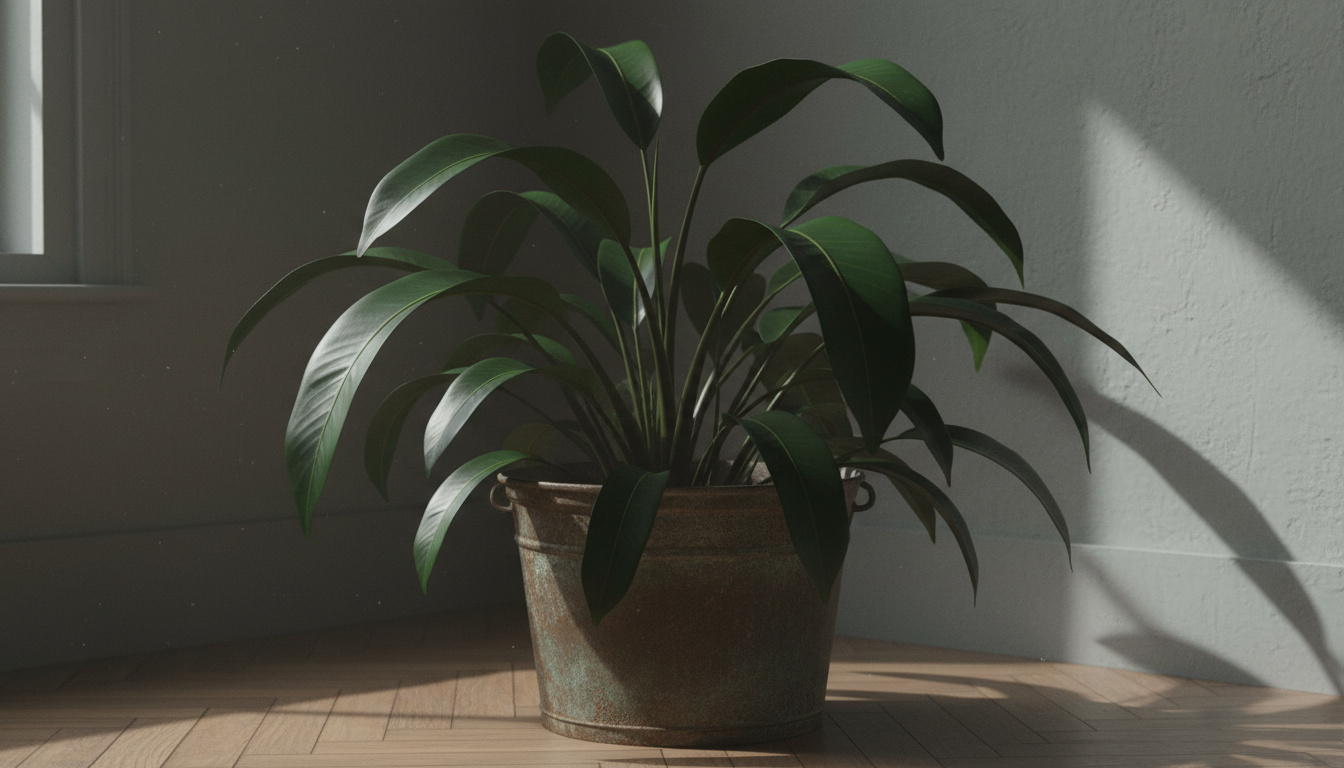
The Cast Iron Plant, or Aspidistra elatior, earns its reputation as one of the toughest houseplants around. This resilient species thrives in low-light conditions and tolerates neglect that would doom most indoor plants.
Native to challenging environments, it adapts well to typical homes. Its broad, arching leaves deliver a lush, evergreen look without demanding constant attention.
Perfect for beginners or shady corners, this plant survives on minimal care while purifying indoor air.
How Do You Care for a Cast Iron Plant?
| Light | Low to bright indirect | Water | Allow soil to dry out completely |
|---|---|---|---|
| Soil | Well-draining mix | Temperature | 7-27°C (45-81°F) |
- Thrives in low light where other plants fail.
- Extremely drought-tolerant, forgiving missed waterings.
- Handles normal household humidity without extra effort.
- Slow-growing, needs repotting only every 2-3 years.
- Non-toxic to pets and children.
- Ranks among NASA-tested air-purifying plants.
- Tolerates temperatures down to 7°C indoors.
| Attribute | Details |
|---|---|
| Scientific Name | Aspidistra elatior |
| Preferred Light | Bright indirect; highly low-light tolerant |
| Watering | Thoroughly, then dry out fully between |
| Soil Type | Well-draining with peat moss and perlite |
| Temperature Range | 7-27°C (45-81°F); ideal 18-24°C |
| Humidity | Normal household (40-50%) |
| Fertilizing | Monthly in spring/summer |
| Pruning | Remove up to one-third damaged leaves |
| Repotting | Every 2-3 years when pot-bound |
| Toxicity | Non-toxic to pets and humans |
| Air Purification | Removes household toxins; NASA-listed |
Can Cast Iron Plant Tolerate Low Light?
It handles nearly any light level with some natural light nearby. Bright indirect light is ideal, but it survives in shady spots with watering just once or twice a month. Direct sun scorches leaves.
Position in bright indirect light for best growth, avoiding direct sun that scorches tips. Shady areas work but slow growth.
The Plant Runner notes it benefits from several hours of indirect light daily.
How Often Do You Water a Cast Iron Plant?
Water thoroughly, then let soil dry completely between sessions. Every 1-2 weeks in spring and summer keeps it moist but not soggy. In winter, check only when fully dry.
Excess water causes root rot, the top killer. Its drought tolerance forgives skipped waterings.
Quirky Plants emphasizes full dry-out cycles.
What Soil Does Cast Iron Plant Need?
A well-draining mix with peat moss and perlite retains moisture without sogginess. Heavy soils suffocate roots.
Fertilize monthly in the growing season with balanced liquid food at half strength. Skip winter.
Dust leaves regularly with a damp cloth for maintenance. Prune yellow or brown leaves at the base, limiting to one-third of total growth. Repot every 2-3 years into a slightly larger pot at the same depth.
What Is a Cast Iron Plant and Why Is It Called That?
Aspidistra elatior, the Cast Iron Plant, is a resilient houseplant that excels in low light and tough conditions. Tough leaves endure where others wilt.
Its name comes from enduring neglect and harsh setups that kill lesser plants, as detailed by Healthy Houseplants.
It thrives in dark indoor spots with little more than basics. Good airflow matters more than high humidity.
Common Problems with Cast Iron Plants and Fixes
Yellowing or browning leaves signal excess light. Move to medium or low indirect conditions.
Root rot stems from overwatering. Let soil dry fully next time.
Mealybugs appear as white cottony spots, sucking sap and weakening the plant.
Fungal issues arise from over-misting. Prioritize air circulation over humidity boosts. The Plant Runner highlights these fixes.
How to Propagate and Grow Cast Iron Plants
Propagate by division: separate sections with roots, pot in well-draining mix at original depth, water well, and place in low-moderate light. Keep moist at first, skipping fertilizer until new growth shows.
Growth is slow. Repot when pot-bound every 2-3 years in a slightly larger container.
Blooms rarely indoors.
See our houseplant propagation guide for more techniques.
Gardenia outlines basic division steps.
Is Cast Iron Plant Safe and Suitable for Outdoors?
Non-toxic and safe if ingested by children or pets, per Quirky Plants.
Details on outdoor growing, hardiness zones, and invasive status are limited.
Ideal for low-light houseplants collections indoors.
Patch Plants confirms pet safety.
Does cast iron plant bloom?
No specific blooming details; rare indoors.
How fast does cast iron plant grow?
Slow-growing; new leaves emerge gradually.
How big does cast iron plant get?
Mature size not specified in reviewed materials.
Is cast iron plant invasive?
No information on invasive potential available.
Can I grow cast iron plant outside?
Outdoor cultivation details absent from sources.
Why is it called cast iron plant?
Tolerates neglect and tough conditions.

Thomas Grant leads fact-checking, source verification and corrections at Australian Insight.