
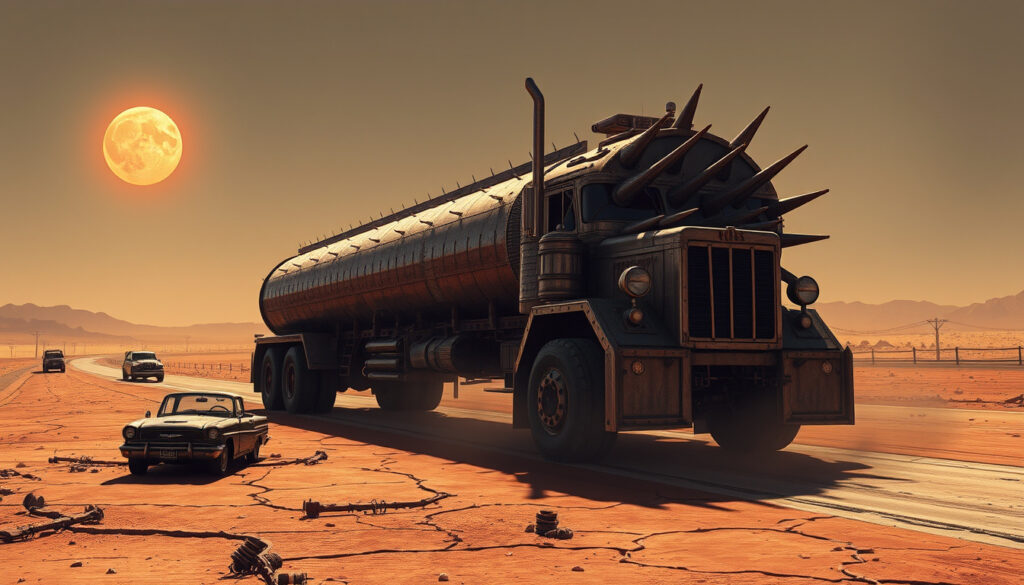
Is Mad Max 2 the Same as The Road Warrior?
Mad Max 2 and The Road Warrior refer to the same 1981 post-apocalyptic action film, with the latter serving as its primary title in North American markets. Australian audiences knew it as Mad Max 2, while international distributors rebranded it as The Road Warrior to clarify its connection to the original 1979 Mad Max. The film continues the story of Max Rockatansky, a former police officer wandering the apocalyptic Australian outback.
George Miller
1981
96 minutes
Action/Post-apocalyptic
George Miller directed both films in the franchise, developing Mad Max 2 from a conceptual premise exploring what happens when civilization loses access to energy and electricity. The original Mad Max launched Mel Gibson in his breakthrough starring role, with Gibson reprising the character in the sequel.
The sequel expanded significantly on the first film’s world-building, transforming the relatively modest independent production into a larger-scale action spectacle. Miller crafted the story around themes of resource scarcity and survival, centering the narrative on a fortified oil refinery besieged by violent marauders.
- Mel Gibson returns as Max Rockatansky, now living as a lone wanderer
- The film introduced iconic villains including Lord Humungus and Wez
- Bruce Spence portrays the Gyro Captain, who serves as Max’s guide to the refinery
- The climactic tanker chase ranks among cinema’s most memorable vehicle stunts
- The tanker contains sand rather than fuel, serving as a decoy for the settlers
- A feral child stows away on the truck during the final escape sequence
- Lord Humungus and Wez die in a head-on collision with the truck
| Detail | Information |
|---|---|
| Director | George Miller |
| Lead Actor | Mel Gibson |
| Primary Antagonists | Lord Humungus, Wez |
| Release Year | 1981 |
| Setting | Post-apocalyptic Australian outback |
| Central Location | Fortified oil refinery |
| Runtime | 96 minutes |
| US Title | The Road Warrior |
What Is the Plot of Mad Max 2?
The world of Mad Max 2 has been devastated by global war and oil shortages. Society has collapsed, and survivors fight over remaining resources in the harsh Australian desert. Former policeman Max Rockatansky drives the wasteland alone, accompanied only by his dog, scavenging for fuel and food to continue his solitary existence.
Max encounters a gyrocopter pilot who leads him to a fortified compound deep in the desert. Inside, a small community of settlers has taken shelter around an operational oil refinery. This valuable resource has attracted the attention of a violent gang of marauders, led by the masked warlord Lord Humungus and his ruthless lieutenant Wez.
Max initially plans to steal fuel and escape on his own. However, his attempt to leave goes wrong when he rescues a wounded settler from the marauders. Trapped inside the compound, Max strikes a deal with Pappagallo, the settlers’ leader: he will retrieve an abandoned semi-truck for them, and in return, they will provide him with enough fuel to continue his journey.
The Cast of Mad Max 2
Mel Gibson stars as Max Rockatansky, reprising the role that launched his career. The antagonist forces are portrayed by Vernon Wells as the feral warrior Wez and Kjell Nilsson as the imposing Lord Humungus. Bruce Spence plays the Gyro Captain who serves as the bridge between Max and the settler community. The ensemble includes various actors portraying settlers, bikers, and the desperate survivors defending their last stronghold against the marauding gang.
Vernon Wells’ portrayal of Wez became iconic among villain performances in action cinema. The character’s paint-covered face and improvised weaponry contributed to the film’s distinct visual style of practical effects and makeup.
The Climactic Chase and Ending
Despite injuries sustained in brutal encounters with the marauders, Max insists on driving the tanker truck himself during the final escape attempt. A high-speed chase erupts across the desert as the settlers attempt to flee with their fuel reserves. Max protects a feral child who has stowed away on the truck, while Pappagallo leads an escort vehicle alongside.
The marauders pursue relentlessly, culminating in a head-on collision between Lord Humungus, Wez, and the truck. Both antagonist leaders die in the crash. The tanker ultimately veers off the road and rolls, revealing that it contains sand rather than gasoline—a decoy that allowed the actual fuel supply to be transported separately. According to analysis of the film’s structure, this twist transforms the ending into a tactical victory rather than a straightforward chase climax.
The Gyro Captain and surviving settlers reach safety with their fuel, while Max returns to his solitary existence on the open road. This ending established the template for the franchise: Max helps others survive before resuming his lone journey through the wasteland.
Who Directed Mad Max 2 and When Was It Released?
George Miller directed Mad Max 2, following his work on the original 1979 film. Miller developed the concept from a thought experiment: what happens to civilization when energy and electricity suddenly become unavailable? This premise shaped the entire narrative architecture of the sequel.
The film was released in 1981 in Australia, where it was marketed as Mad Max 2. International distributors, however, chose to rename it The Road Warrior for markets outside Australia, particularly in North America. This dual naming convention has occasionally confused viewers searching for information about the film.
Miller expanded the scope considerably from the first film, moving beyond the personal revenge narrative of the original Mad Max to explore broader themes of community survival and resource competition in a collapsed society.
The original Mad Max launched in 1979 as a low-budget independent production that achieved remarkable international success. This led to increased funding for the sequel, allowing Miller to realize larger-scale action sequences and more elaborate post-apocalyptic set pieces. The production filmed in various Australian desert locations, utilizing practical stunt work and custom-built vehicles that became hallmarks of the franchise.
Production Timeline
Following the success of the original film, production on the sequel began in earnest during the late 1970s, with principal photography and post-production work completing in time for a 1981 theatrical release. The film’s development benefited from the international attention garnered by the first installment, which had achieved commercial success in multiple markets despite its modest budget.
- 1979: Original Mad Max released, achieving international success
- 1980: Development of Mad Max 2 begins with expanded budget
- 1981: Mad Max 2 released in Australia; The Road Warrior released in North America
- 1980s-1990s: Film gains cult following and home video distribution
- 2000s-Present: Various remastered releases and anniversary editions
Where Can I Watch Mad Max 2 Today?
Mad Max 2, known internationally as The Road Warrior, remains available through various home entertainment channels. The film has been reissued multiple times over the decades, appearing on DVD, Blu-ray, and digital platforms. Its enduring popularity has led to regular inclusion in streaming rotations, particularly through genre-focused channels and platforms that specialize in classic action cinema.
The film is included in the broader Mad Max franchise available on several major streaming services, where it often appears alongside other entries in the series. Physical media editions have been released by different distributors over the years, with collector’s editions and anniversary restorations becoming available for enthusiasts.
Streaming platform availability changes frequently. For the most current information about where to watch Mad Max 2, viewers should check directly with major streaming services, digital rental platforms, and home video retailers. Availability varies by region and platform.
Film archives and classic cinema platforms occasionally feature Mad Max 2 as part of curated post-apocalyptic or action collections. The British Film Institute and similar institutions have included the film in programming related to Australian cinema and genre filmmaking history.
Mad Max 2: Established Facts and Areas of Uncertainty
Understanding what is definitively documented versus what remains unclear helps contextualize the film’s legacy and ongoing scholarly discussion.
Confirmed Information
- ✓ Directed by George Miller
- ✓ Released in 1981 (Australia) and 1982 (US)
- ✓ Stars Mel Gibson as Max Rockatansky
- ✓ Runtime of 96 minutes
- ✓ Features Lord Humungus and Wez as antagonists
- ✓ Set around an oil refinery siege
- ✓ US title is “The Road Warrior”
Areas Requiring Additional Research
- ? Complete awards and nominations details
- ? Specific 4K remaster technical specifications
- ? Current 2025 streaming platform availability
- ? Full behind-the-scenes production documentation
- ? Comprehensive cultural impact studies
- ? Detailed box office figures by region
- ? Modern critical reassessments
Mad Max 2 in Franchise Context
Mad Max 2 represents a pivotal entry in the franchise that established several elements that would define subsequent installments. The sequel introduced the character archetype of Max as reluctant savior—someone who does not seek conflict but becomes drawn into survival situations by circumstance rather than choice. This narrative template influenced the structure of later films including Mad Max: Fury Road.
The franchise’s influence extends beyond cinema into video games, literature, and broader popular culture. Scholars and film critics have analyzed Mad Max 2 for its depiction of resource scarcity, its exploration of community versus individualism, and its innovative action choreography that influenced decades of filmmakers.
The film’s practical approach to stunt work and vehicle design set standards for the genre, with many of its techniques still referenced in contemporary action production. The distinction between Australian and international titles—Mad Max 2 versus The Road Warrior—reflects broader patterns in how films are marketed differently across markets.
Sources and Critical Reception
The sequel transformed what began as a personal revenge tale into an expansive vision of societal collapse and human resilience under extreme pressure. Miller’s direction elevated the material beyond genre conventions into something approaching mythic storytelling.
Film archives and databases including Wikipedia, IMDb, and Rotten Tomatoes provide substantial documentation of the film’s production, cast, and reception history. These sources offer varying perspectives from professional critics and user reviewers, allowing readers to compare assessments across different evaluation frameworks.
Mad Max 2’s action sequences were achieved through meticulous planning and dangerous practical stunts, setting it apart from films that relied on visual effects. The commitment to real stunt work contributed to the film’s lasting impact on action cinema.
The Letterboxd community provides ongoing audience perspectives, with users frequently citing the tanker chase sequence as a standout achievement in action filmmaking. This user-generated critical dialogue complements formal academic and journalistic analysis of the film’s place in cinema history.
Summary
Mad Max 2: The Road Warrior stands as a landmark in post-apocalyptic cinema, expanding the world George Miller created with the original 1979 film into a broader examination of survival, community, and resource scarcity. Released in 1981, the film introduced Mel Gibson’s Max Rockatansky to international audiences and established many elements that would define the franchise’s future. Whether watched as an action film, studied as a cultural artifact, or appreciated for its innovative practical effects, Mad Max 2 continues to resonate with audiences decades after its initial release. The distinction between its Australian title and international name—The Road Warrior—remains one of cinema’s more notable dual-naming conventions, reflecting the global appeal of its vision of a fuel-depleted future.
Frequently Asked Questions
Did Mad Max 2 win any awards?
Specific awards and nominations for Mad Max 2 would require verification from entertainment databases. The available research does not contain comprehensive awards documentation.
How does Mad Max 2 compare to the original Mad Max?
The original Mad Max focused on personal revenge following the murder of Max’s family, while Mad Max 2 expanded into community survival themes with larger-scale action sequences and a more elaborate post-apocalyptic world.
Is there a trailer for Mad Max 2?
Official trailers for Mad Max 2 exist and have been widely distributed through various media platforms. The research provided does not include specific trailer links.
What happened at the end of Mad Max 2?
Max drives a decoy tanker truck containing sand while the actual fuel is transported separately. Lord Humungus and Wez die in a collision with the truck. The settlers escape with their fuel while Max returns to his solitary existence.
Who played Lord Humungus in Mad Max 2?
Kjell Nilsson portrayed Lord Humungus, the masked warlord leading the marauding gang that attacks the settlers’ oil refinery.
What is the runtime of Mad Max 2?
Mad Max 2 runs for 96 minutes, making it slightly longer than the original 1979 film.
Why is it called The Road Warrior in some countries?
International distributors renamed the film The Road Warrior for markets outside Australia, particularly North America, to clarify its connection to the original Mad Max and to give the sequel a distinctive international identity.

Sophie Ellis covers business, markets and economic policy for Australian Insight.