
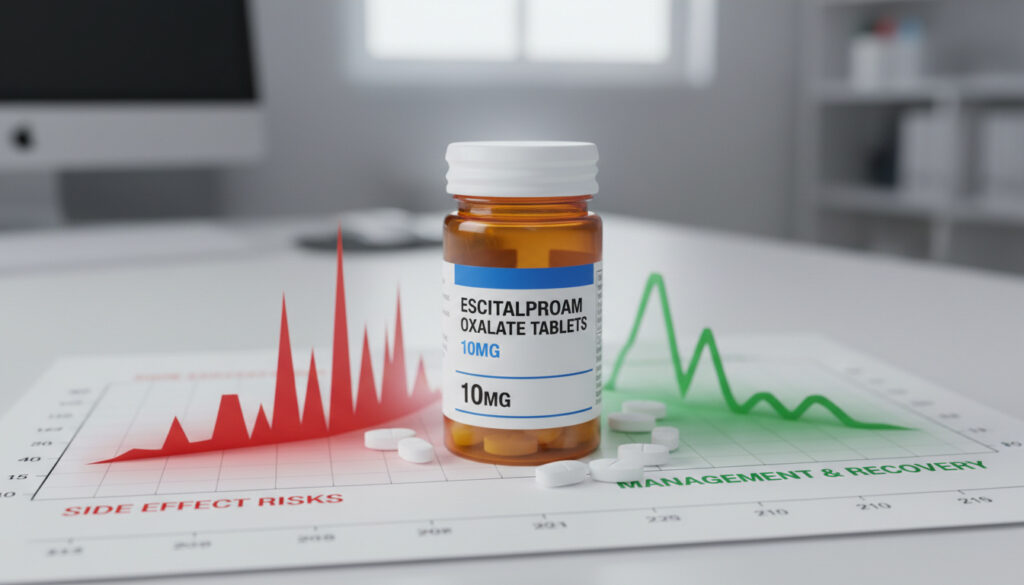
Escitalopram, sold as Lexapro, is an SSRI antidepressant used for depression and anxiety. Common side effects include nausea, headache, insomnia, sexual dysfunction, sweating, and fatigue. These often appear early and improve within one to two weeks for many users.
More serious risks involve serotonin syndrome, low sodium levels, seizures, suicidal thoughts, and mania. Management focuses on monitoring symptoms, adjusting doses, or tapering slowly to avoid withdrawal issues.
Long-term use raises concerns like persistent sexual side effects and weight changes, particularly in elderly men who face higher risks of falls and hyponatremia.
What Are the Common Side Effects of Escitalopram?
| Common effects | Nausea, headache (affects many early on) |
| Serious risks | Serotonin syndrome (rare) |
| Onset period | First 1-2 weeks |
| Basic management | Consult doctor, monitor |
- Most common side effects occur in the first weeks and resolve over time.
- Sexual dysfunction affects both sexes but is prominent in men.
- Nausea and headache top the list of initial complaints.
- Insomnia or drowsiness disrupts sleep patterns early.
- Sweating and fatigue add to daily discomfort.
- Many users adapt as treatment continues.
- Appetite loss leads to initial weight changes in some.
| Side Effect | Frequency | Action |
|---|---|---|
| Nausea | Common | Take with food |
| Headache | Common | Monitor, hydrate |
| Insomnia | Frequent early | Time dose appropriately |
| Sexual dysfunction | Common, persistent | Dose adjust or switch |
| Sweating | Frequent | Usually improves |
| Fatigue | Common | Rest, monitor |
| Dizziness | Early | Avoid abrupt moves |
| Dry mouth | Frequent | Hydrate |
What Are the Serious Side Effects of Escitalopram?
Serious reactions demand immediate medical attention due to their severity.
Serotonin Syndrome Risks
Symptoms include agitation, hallucinations, rapid heartbeat, fever, muscle rigidity, and seizures. Risk rises with other serotonergic drugs, as noted by Medical News Today.
Other Critical Issues
Suicidal thoughts increase in young adults during early treatment. Low sodium causes confusion and weakness, especially in the elderly, per NAMI.
Call a doctor for rapid heartbeat, seizures, or severe confusion from serotonin syndrome or hyponatremia.
How Long Do Escitalopram Side Effects Last?
Common side effects peak early and often subside within weeks.
Short-Term Timeline
Many improve in the first one to two weeks, according to GoodRx.
Persistent Concerns
Sexual issues and sleep disturbances may last indefinitely for some users.
Tolerance develops to most effects after the initial months, though not all resolve fully.
Does Escitalopram Cause Weight Gain or Sexual Side Effects?
Weight gain occurs in some due to appetite recovery or metabolism shifts, while initial nausea causes loss.
Sexual side effects like erectile dysfunction and delayed ejaculation are common, especially in men, and may persist after stopping, as detailed by MedlinePlus.
Hair loss appears rarely and links more to stress than direct causation, per Mayo Clinic.
Managing Escitalopram Side Effects and Withdrawal
Start with low doses and titrate slowly. Take with food to ease nausea.
For withdrawal, taper gradually over weeks to avoid dizziness and brain zaps, as advised by NCBI.
Elderly patients need caution for hyponatremia and falls; low doses like 5mg recommended. Thoracic Outlet Syndrome – Symptoms Causes Diagnosis Treatment shares monitoring parallels for neurological risks.
Reduce by 5mg every 1-2 weeks using liquid form for accuracy in long-term users.
Escitalopram Side Effects Timeline
- Days 1-7: Initial onset of nausea, headache, anxiety.
- Weeks 1-2: Peak of common effects like insomnia, sweating.
- Weeks 2-4: Many start to improve; monitor closely.
- Months 1-3: Adaptation to fatigue, sexual issues may persist.
- Long-term: Potential ongoing sexual dysfunction or weight changes.
- Discontinuation: 1-3 weeks of withdrawal if not tapered.
Established Facts vs. Uncertainties on Escitalopram Side Effects
| Established | Unclear or Variable |
|---|---|
| Common early effects resolve in 1-2 weeks | Weight gain extent varies by individual |
| Serotonin syndrome risk with other drugs | Frequency of permanent sexual issues |
| Withdrawal from abrupt stop | Hair loss direct link |
| Elderly hyponatremia risk | Emotional blunting long-term |
Context of Escitalopram Use
As an SSRI, escitalopram boosts serotonin levels to treat depression. Side effects stem from this action, varying by dose and patient factors.
Special risks apply to elderly men, including urinary issues and glaucoma potential, per WebMD.
Sources on Escitalopram Side Effects
Sexual side effects are common and may not resolve quickly.
Elderly face higher hyponatremia and fall risks.
Key Takeaways for Escitalopram Side Effects
Monitor early common effects, seek help for serious signs, and taper withdrawal carefully. Individual responses differ; consult professionals. For related supplement safety, see Blackmores Fish Oil – Benefits Dosage Safety Guide.
What are escitalopram withdrawal side effects?
Dizziness, irritability, brain zaps, nausea; taper over 4 weeks.
Escitalopram side effects in elderly?
Higher hyponatremia, falls, start at 5mg.
Does escitalopram cause hair loss?
Rare, likely indirect from stress.
Escitalopram 10mg side effects?
Similar to standard; nausea, headache common initially.
When do side effects start?
Within first days to weeks.
Managing sexual side effects?
Dose reduce, switch, or add bupropion.
Escitalopram side effects in men?
Prominent sexual dysfunction, urinary risks.

Thomas Grant leads fact-checking, source verification and corrections at Australian Insight.