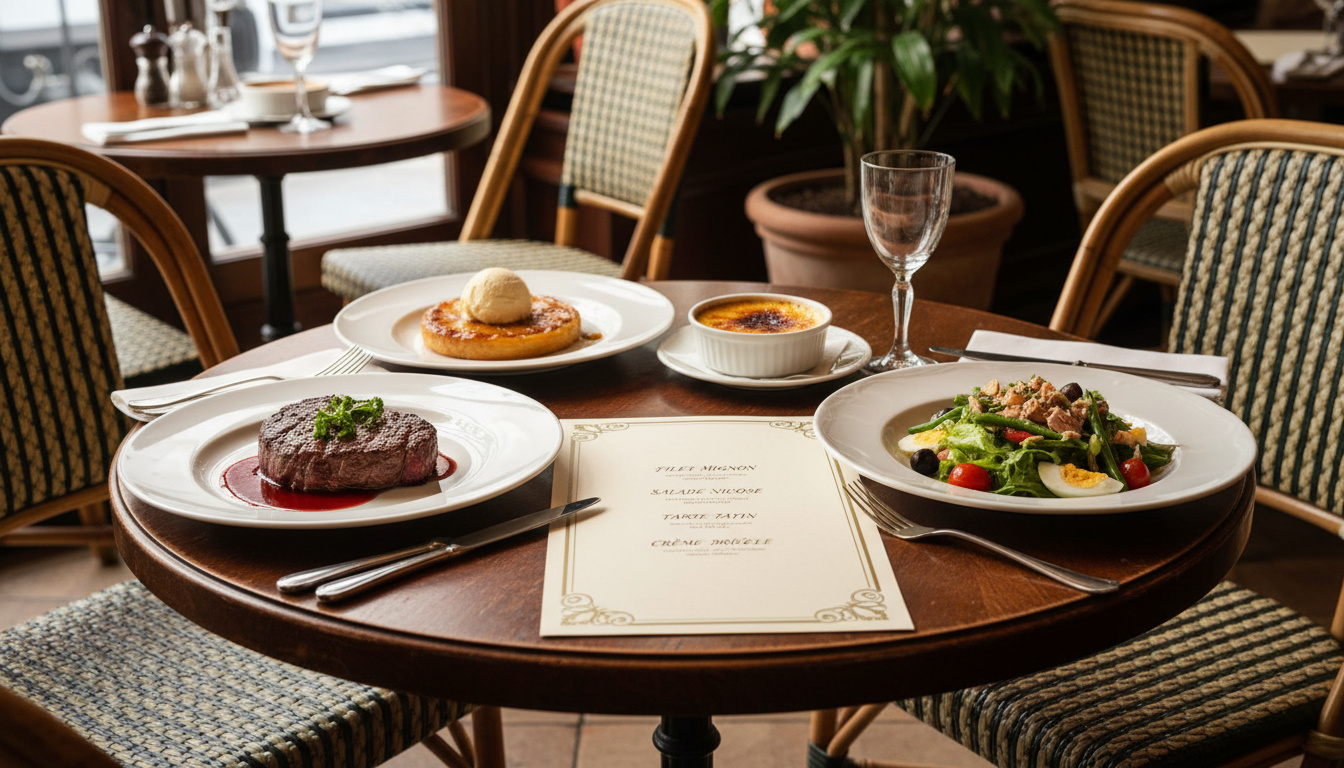
À la carte refers to a French dining term meaning “according to the card,” where individual dishes are priced and ordered separately rather than as part of a fixed-price meal. This system allows diners to customize their orders based on preferences and budget.
The approach contrasts with traditional set menus, offering flexibility in restaurants worldwide. It emerged as a response to changing social dynamics in the 19th century.
Understanding à la carte helps navigate menus in steakhouses, sushi spots, and fine dining, where sides and mains often carry extra costs.
What Does A La Carte Mean?
| Definition | Origin | Common Use | Vs. Fixed Menus |
|---|---|---|---|
| By the menu; individual items priced separately | French, 19th century | Restaurants, services like spas | Flexible but often pricier |
- Literally translates to “by the card” or menu in French.
- Provides maximum customization over set meals.
- Typically incurs higher costs for equivalent orders.
- Expanded beyond food to services and hospitality.
- Orders dishes standalone, without sides included.
- Common in fine dining alongside prix fixe options.
- Reflects personal preferences and budget control.
| Aspect | Detail |
|---|---|
| Literal Translation | According to the card (menu) |
| First English Use | 1816, per Merriam-Webster |
| Pronunciation | ˌä-lə-ˈkärt |
| Core Feature | Individual item pricing |
| Flexibility | Select specific dishes independently |
| English Spelling | Accents rarely used |
| Menu Role | Personalized dining experience |
| Synonyms | Individual order |
| Primary Context | Restaurants and hospitality |
Where Does ‘A La Carte’ Come From?
The term stems from French, literally meaning “according to the card,” referring to the menu. “À la” indicates “in the manner of,” while “carte” derives from Latin for paper or writing.
Etymology Breakdown
“Carte” traces to Medieval Latin carta, meaning a card or paper, as detailed by Etymonline.
Historical Origins
It appeared in English in the early 1800s from 19th-century France. The earliest citation comes from Joseph Sherer’s 1826 book, noting comfortable fare à la carte at any hour, per Phrases.org.uk.
This shift departed from table d’hôte, driven by middle-class growth, travel, and printing advances for detailed menus, according to Chowbus.
A La Carte vs. Table d’Hôte and Prix Fixe
| Dining Style | Price Structure | Features |
|---|---|---|
| À la carte | Individual item pricing | Maximum flexibility; each dish separate |
| Table d’hôte | Fixed inclusive price | Limited choices; all-inclusive meal |
| Prix fixe | Fixed for multi-course | Affordable flat rate for courses |
| Buffet | Single flat price | All-you-can-eat self-service |
Key Pricing Differences
À la carte often exceeds fixed-menu costs for similar items. Steaks require extra payment for sides like mashed potatoes.
Items on prix fixe are cheaper than à la carte equivalents, per Food Republic.
Table d’hôte preceded it as the traditional fixed option. See Trace – Definition, Examples and Key Uses for related terms.
A La Carte Menu Examples and Usage
Restaurant Examples
- Steakhouses: Steaks à la carte, sides extra.
- Sushi spots: Pieces priced individually.
- Fine dining: Full menus beside prix fixe.
- Chains: Mains alone vs. platter combos.
Non-Restaurant Contexts
Extends to spa treatments, though mainly restaurants. Offers standalone services.
Order without accompaniments for pure à la carte experience, providing budget control.
Details in Trace – Noun and Verb Meanings, Synonyms Explained.
The Historical Timeline of À La Carte
- : Emerges in English from French dining.
- : First known use, per Merriam-Webster.
- : Cited in Sherer’s travel book.
- : Replaces table d’hôte amid social changes.
- : Becomes standard restaurant term.
- : Expands to services like spas.
Established Facts vs. Uncertainties
| Established Information | Information That Remains Unclear |
|---|---|
| Definition standardized as individual pricing | Exact date of French invention |
| Etymology from French “by the menu” | Specific inventor or first restaurant |
| Pronunciation and early citations confirmed | Precise societal trigger points |
| Comparisons to fixed menus well-documented | Non-food expansion timeline |
The Broader Context of À La Carte
It evolved from elite French dining to everyday use, suiting diverse preferences. Benefits flexibility but raises costs for diners and complexity for restaurants. For more information on this topic, you can refer to Hur mycket kött per person middag.
Sources and Key Quotes
Merriam-Webster defines it as ordering “according to a menu or list that prices items separately.”
Merriam-Webster
“From French à la carte, ‘by the menu’.”
Etymonline
Key Takeaways on A La Carte Meaning
À la carte means individual menu pricing for flexibility, originating in 19th-century France. It costs more than fixed options but empowers choice in restaurants and beyond.
What does a la carte mean in a restaurant?
Each dish or drink priced separately, ordered independently for customization.
Is a la carte more expensive?
Yes, typically higher than prix fixe or platters for equivalent items.
How do you pronounce a la carte?
ˌä-lə-ˈkärt in English.
What is à la carte literally?
“According to the card,” meaning by the menu.
A la carte vs buffet?
À la carte prices items separately; buffet is flat-rate all-you-can-eat.
A la carte meaning in other contexts?
Applies to services like spas, for individual selections.
What is an a la carte menu?
List with separate prices per item, no bundles.
Related stories




Liam O'Brien covers Australian politics and public affairs for Australian Insight.